
Your home’s paint is not decoration. It is the cheapest insurance your house owns, and exterior painting is the one maintenance job that quietly protects everything underneath it. Most advice about how often to paint house exterior surfaces hands you a number, like every five or seven years, and sends you on your way. That number is easy to remember. It is also the wrong way to make the call. A calendar cannot see your house, and your siding does not age on a schedule. So before you circle a date or brush it off for another summer, it helps to know what the paint is actually doing out there and what it looks like when it stops.
Key Takeaways:
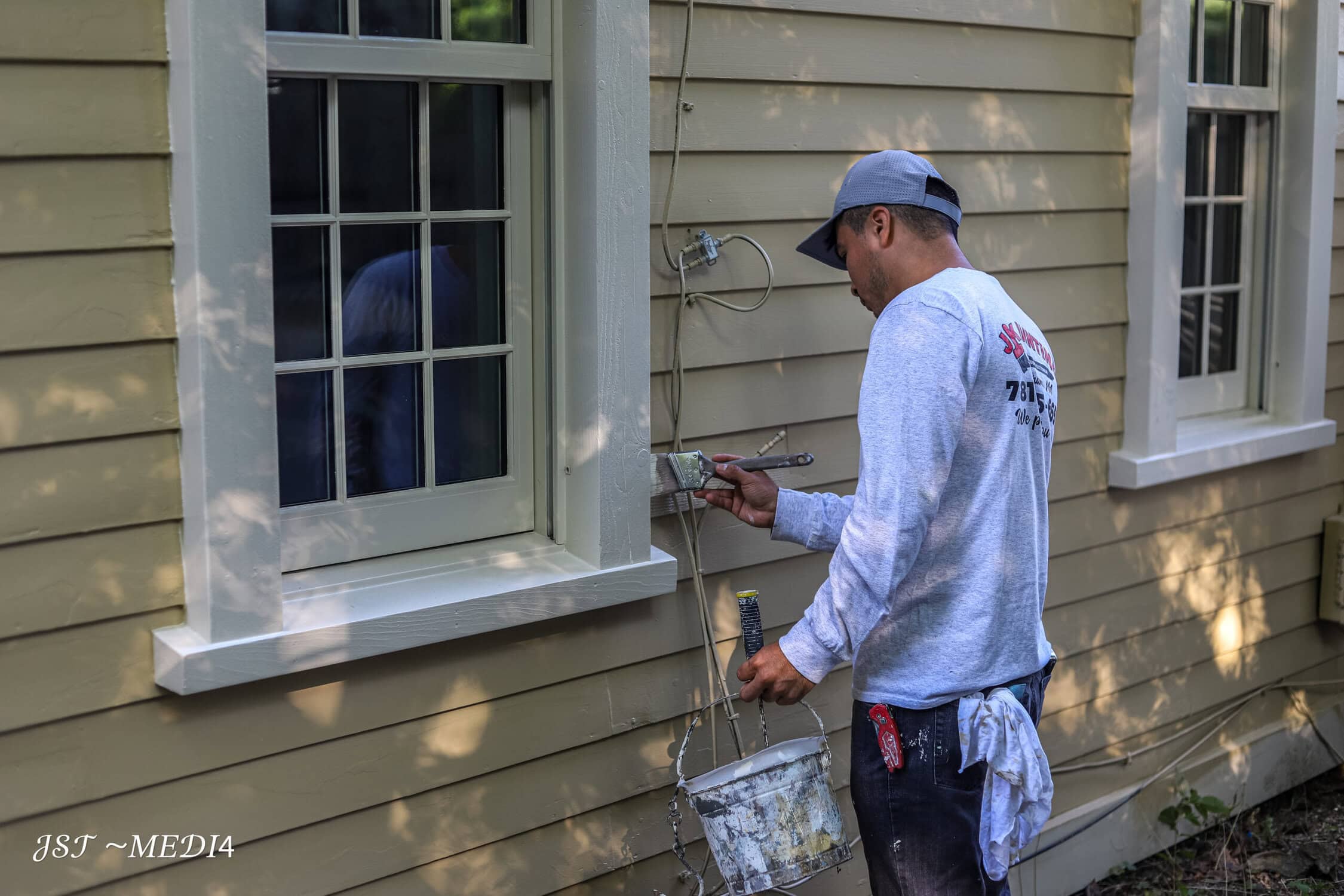
Why How Often to Paint House Exterior Is the Wrong Question
Here is the contrarian part. A single number was never going to be accurate. “Repaint every five years” treats a home in Newton the same as a home in Phoenix, which falls apart the moment you think about it. Even on one house, the sunny south wall ages faster than the shaded north wall a few feet away.
The better question is simple. Is the paint still doing its job? Framed that way, how often to paint house exterior surfaces stops being a guess and becomes something you can check with your own eyes. Paint protects. Once it stops protecting, the clock that matters has already started, and it has nothing to do with the calendar on your wall.
This is why waiting for your house to “look bad” is the most expensive habit a homeowner can keep. By the time the color looks tired, the film has often cracked somewhere you have not looked. So the smart move is to judge the paint by what it is doing, not by how many birthdays it has had.
What Your Paint Is Actually Doing Out There
Picture exterior paint as a thin, flexible shell. Its job is to keep water out of your wood siding and trim. Wood that stays dry stays solid. Wood that gets wet again and again starts to rot, and rot does not stop on its own.
Research from Purdue University’s extension service explains how trapped moisture leads to blistering paint and, when it is ignored, wood decay and lost insulation value. That is the chain reaction you are trying to head off. The film fails first. Water slips in second. Rot, mold, and soft wood show up third. The repair bill shows up last.
So exterior painting is a protection project, not a beauty project. The fresh color is a nice bonus. The real value is the sealed, continuous barrier that keeps your walls dry through every season. When you treat paint as protection, the timing question starts to answer itself. You repaint while the shell is still mostly intact, not after it has already failed and let the weather in.
The Signs That Matter More Than the Calendar
You do not need a contractor to spot most of these. A slow walk around your house once or twice a year tells you nearly everything. Here is what to look for, in plain terms, so you can judge for yourself.
None of this means your home has a problem today. It is a checklist, not an accusation. The point is to swap guesswork for evidence. If you spot two or three of these together, the answer is probably yes, and exterior painting moves up your list.
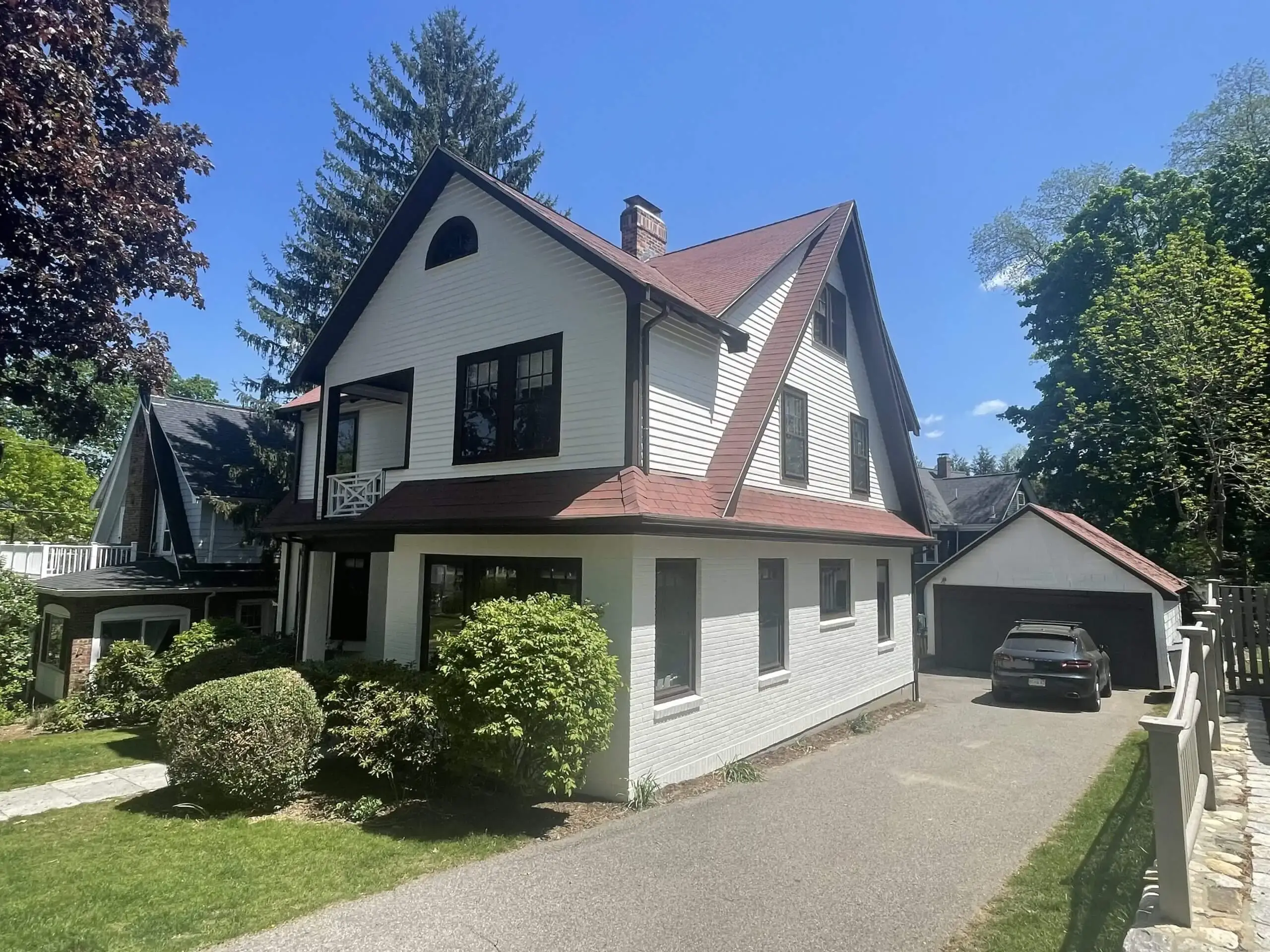
How Often to Paint House Exterior in a Climate Like Newton’s
Climate is the factor those generic numbers skip, and New England is rough on paint. Newton homes face freezing winters, humid summers, and the occasional nor’easter. Water soaks into a tiny crack, freezes, expands, and pries at the seam. Summer humidity then feeds mildew. That freeze-thaw cycle is why exterior painting in New England often asks for attention sooner than a coating would in a mild, dry state.
Your siding sets the baseline. Home-improvement reporting lines up fairly closely on the ranges:
Treat those as starting points, not promises. A north-facing, tree-shaded wall behaves nothing like a baking south wall on the same house. So how often to paint house exterior surfaces really comes down to your specific home, your siding, and how well the last coat was prepped and applied.
What a Smart Repaint Decision Looks Like
Here is the plan, and it is short. First, do the walk-around and write down what you see. Second, get a professional inspection before anything looks alarming. A good painter checks moisture, prep, caulk, and wood condition, then tells you plainly whether you can wait a year or should act now. That single visit answers how often to paint house exterior surfaces for your specific home, not the average one.
Money is the quiet worry for most people, so let us be direct about it. National cost data from HomeAdvisor puts a typical exterior repaint near $3,177, with most projects landing between about $1,800 and $4,500. Waiting until rot sets in changes that math fast, because then you are paying for carpentry and siding repair on top of the paint.
This is where transparent criteria beat sales pressure. Ask any exterior painting company three things. How do you prep the surface? What exactly are you sealing and repairing? And what does the written scope include? A contractor who answers in plain steps and real numbers is showing you how the decision should be made. The goal is not to sell you paint. It is to keep your house dry and solid for as long as it can be.
Stop Guessing About Your Home’s Exterior
You should not have to figure this out from a ladder with a flashlight. If you want a clear, honest read before you commit to exterior painting, JK Painting Service Corp will walk your exterior, check the spots that actually matter, and give you a straight answer backed by a written scope and a real number. If your shell is still holding, you will hear that too, with no push to paint today.
Call JK Painting Service Corp at 781-650-7296 to book an exterior painting inspection. You will know exactly where your paint stands, what it is protecting, and what the right next step is for your house, whether that is this season or next year.