
Paint colors for kitchen walls and cabinets can look different even when the color name stays the same. Sheen, reflected light, glossy counters, cabinet finish, backsplash tile, and evening lighting can all change how that color reads once it is in the room.
For Wellesley homeowners, this guide focuses on that interaction. Start with the surfaces that reflect the most light, decide where you want more or less sheen, then test the wall and cabinet colors as a group before approving the palette.
Start With the Most Reflective Surfaces
Kitchen color is affected by more than the painted wall. Countertops, tile, stainless appliances, glass cabinet doors, and glossy hardware can bounce light and color around the room.
The Same Color Can Look Different in Two Sheens
A color shown in matte, eggshell, satin, or semi-gloss can appear different because each finish reflects light differently. More reflection can make a color look brighter in one part of the day and stronger under direct fixtures at night.
This is one reason wall and cabinet color decisions should not be judged from color chips alone.
Choose the Wall Sheen After You Inspect the Walls
Kitchen walls often need routine wiping, but that does not make satin the automatic answer for every project. Paint lines differ in washability, and higher sheen can make repairs, drywall texture, and roller marks easier to see.
Start with wall condition, cleaning needs, and the exact product. Then choose the sheen that gives the right balance of appearance and maintenance.
Cabinet Finish Is a Separate Decision
Cabinet doors and drawer fronts receive repeated hand contact and cleaning, so they need a coating system made for that use. The right cabinet coating may not use the same sheen or product type as the kitchen walls.
JK Painting Service Corp provides cabinet painting services for kitchens where the layout is staying but the cabinet finish needs an update.
What the 2026 Kitchen Research Supports
The National Kitchen & Bath Association 2026 Kitchen Trends Report found neutrals leading kitchen color preferences at 96%, followed by greens at 86% and blues at 78%.
The report also found statement color appearing on backsplashes, wallpaper, islands, and decorative accessories. Natural lighting, quality lighting, and task lighting ranked among the most important kitchen design considerations.
That makes lighting and surface reflection especially relevant when choosing paint colors for kitchen projects.
Warm Whites Need to Be Checked Against Every White Surface
Warm white walls can work well with natural wood, cream stone, brass, and many cabinet finishes. The problem starts when several different whites sit beside each other.
A creamy wall color can look yellow next to a cooler white cabinet. A crisp wall white can make an ivory backsplash or countertop look dull.
Compare wall, cabinet, trim, counter, and backsplash whites side by side before making the final choice.
Muted Greens Can Look Different Beside Polished Stone
Sage, olive, eucalyptus, and gray-green can work well in kitchens, but reflective stone and bright tile may make the green feel more noticeable than it did on a sample card.
Test the color near the countertop and backsplash, not only on a wall across the room.
Blue Can Shift Between Daylight and Task Lighting
Soft blue-gray, blue-green, and deeper navy tones can all work in kitchens. Their appearance can change when cool daylight gives way to pendants, recessed fixtures, or under-cabinet lighting.
Judge the blue during the hours you use the kitchen most. A color that feels balanced at noon but too cold or too strong every evening may not be the right choice.
Natural Wood Can Reduce the Need for More Painted Color
The 2026 NKBA report found growing interest in wood-grain cabinetry. Wood already adds movement, warmth, and variation, so the walls do not need to carry the same amount of visual interest.
A quieter neutral, muted green, blue-gray, or cream can support the wood while leaving room for the counter, backsplash, and hardware to contribute.
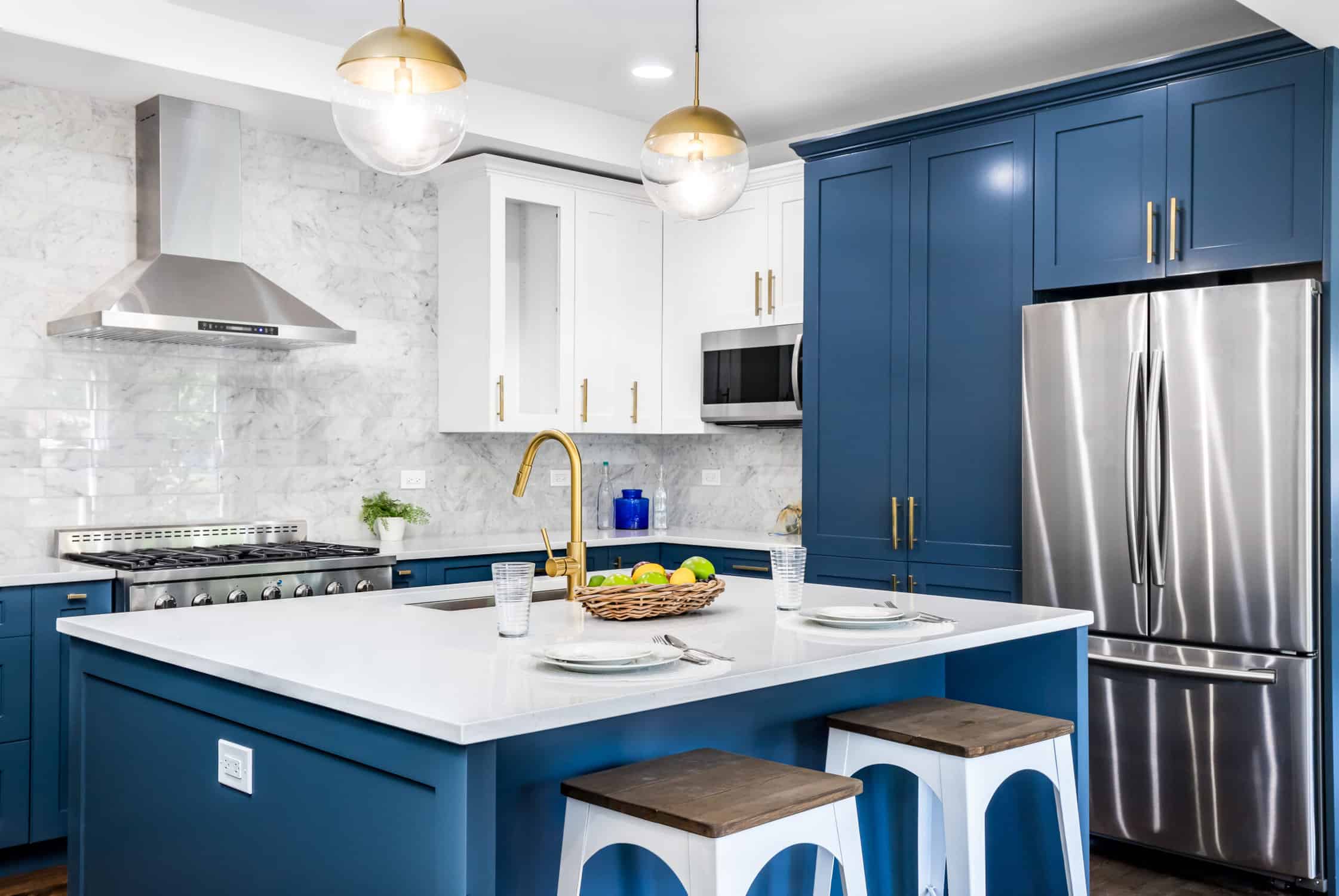
Use the Island for a Controlled Change in Sheen or Color
An island is a useful place to introduce a stronger color or a different cabinet finish because it already reads as a separate architectural element.
A deeper island can create contrast against lighter perimeter cabinets, while a similar color in a different sheen can create a subtler distinction.
The island finish still needs to work with the flooring, countertop, hardware, and nearby wall color.
Open Kitchens Need the Next Room in the Test
Many Wellesley kitchens connect directly to dining or living spaces. Stand in the adjoining room and look back into the kitchen before approving the palette.
Reflected light from one room can affect the other, especially when large windows, pale floors, or glossy surfaces are involved.
JK Painting’s guide to interior painting conditions provides more context on how the environment affects an interior project.
Low-VOC Is a Product Choice, Not a Color Choice
Low-VOC and zero-VOC options are available across many color families, so indoor air considerations should not be treated as a reason to choose one color over another.
Compare the product specifications, room use, ventilation, and manufacturer guidance separately from the color decision.
JK Painting’s article on sustainable interior painting covers additional product and process considerations.
Test the Full Palette Under Two Lighting Conditions
Do not approve a kitchen color from one sample in one part of the day.
There is no universal sample size or waiting period that guarantees the right result. Follow the sample-product directions and judge the color after it has dried as directed.
Kitchen Painting With JK Painting Service Corp
JK Painting Service Corp is a family-owned painting contractor based in Waltham, Massachusetts, and serving Wellesley and surrounding communities across the western Greater Boston suburbs.
The company was founded in 2015 by Juan Orellana, who began working in residential painting in 2002. Current company information lists more than 2,000 completed projects, 80+ years of combined team experience, free estimates, daily communication, fixed-price proposals, complete cleanup, and a two-year workmanship warranty on completed work.
JK Painting also provides interior painting, cabinet painting, exterior painting, commercial painting, deck and fence finishing, epoxy floor coatings, and pressure washing.
Frequently Asked Questions About Paint Colors for Kitchen Projects
What paint colors for kitchen walls are popular in 2026?
The 2026 NKBA report shows strong support for neutrals, greens, and blues. Use those families as a starting point, then compare them with your cabinets, counters, backsplash, flooring, lighting, and surface sheen.
Can the same paint color look different in another sheen?
Yes. Different sheen levels reflect light differently, which can change how bright, deep, or noticeable the same color appears.
Should kitchen walls and cabinets use the same sheen?
Not automatically. Wall paint and cabinet coatings have different wear and appearance needs, so the product and sheen should be selected separately for each surface.
Do small kitchens need light wall colors?
No. Light colors can reflect more light, but mid-tone or deeper colors can also work when the cabinets, counters, flooring, and lighting provide enough balance.
How should I test kitchen paint colors?
Compare wall and cabinet samples together beside the countertop, backsplash, flooring, hardware, and appliances. Check them in daylight and again under the kitchen lights at night.