One question comes up again and again when homeowners talk to professional cabinet painters: spray or brush? It sounds simple, but the answer has a real impact on the best finish for painted cabinets. Get it right, and your kitchen looks sharp for years. Get it wrong, and you’ll notice it every time you open a cupboard.
This post breaks down both methods clearly. No fluff. Just what you need to know before making a call.
Key Takeaways:
- Spraying produces a smoother, more even finish with no visible brush marks.
- Brushing can look great when done with skill, but results vary widely.
- The best finish for painted cabinets depends on your goals, your space, and who is doing the work.
- Most professional cabinet painters choose spraying for interior kitchen cabinet jobs.
- Prep work matters just as much as which method you use.
Why the Finish on Your Cabinets Matters
Cabinets cover a lot of visual space in a kitchen. A rough or streaky finish makes new paint look almost as tired as old, worn paint. A smooth, even finish looks intentional. It reads like quality.
The best finish for painted cabinets is one you barely notice. The surface is even. The color reads well under light. There are no ridges, brush marks, or drips. Getting there takes the right method, the right products, and the right hands.
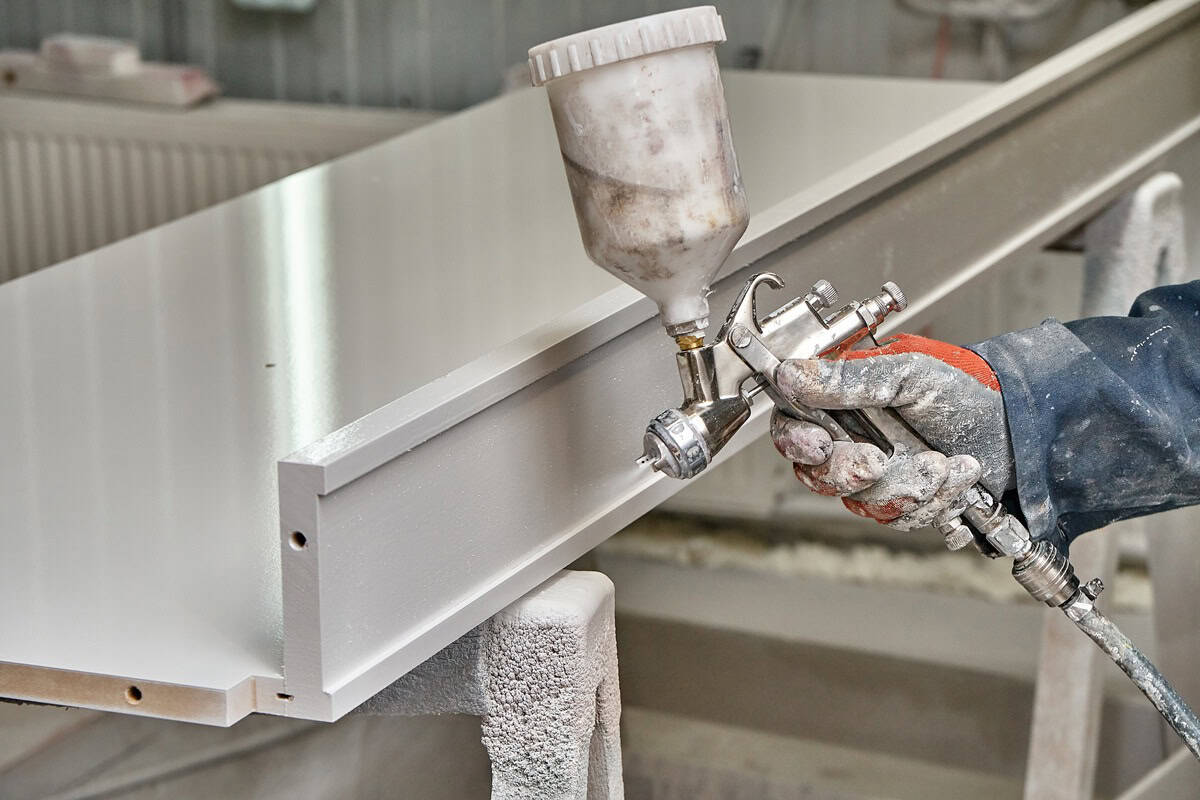
How Spray Application Works
Spraying uses a paint sprayer to apply paint in a fine, even mist. The paint goes on in thin coats that dry to a smooth, hard surface. When done right, the result looks close to a factory finish. Most people cannot tell the difference between a well-sprayed cabinet door and a brand-new one.
Spray application is what most professional cabinet painters use for kitchen cabinet work. Here is why it is the preferred method:
- No brush marks. Paint goes on without bristles touching the surface, so the finish stays smooth.
- Even color. The paint applies at a consistent thickness across the whole panel.
- Works well on detailed doors. Raised-panel and shaker-style doors are easier to coat evenly with a sprayer.
- Faster on full kitchen jobs. Spraying covers more surface area in less time.
But spraying has real challenges. Setup takes time. Every nearby surface needs to be masked to catch overspray. Countertops, floors, and appliances all need protection. The equipment takes practice to use well. In the wrong hands, a sprayer creates runs, drips, and uneven buildup.
That is why the best finish for painted cabinets almost always comes from professional cabinet painters who spray regularly, not someone picking up a sprayer for the first time.
How Brush and Roller Application Works
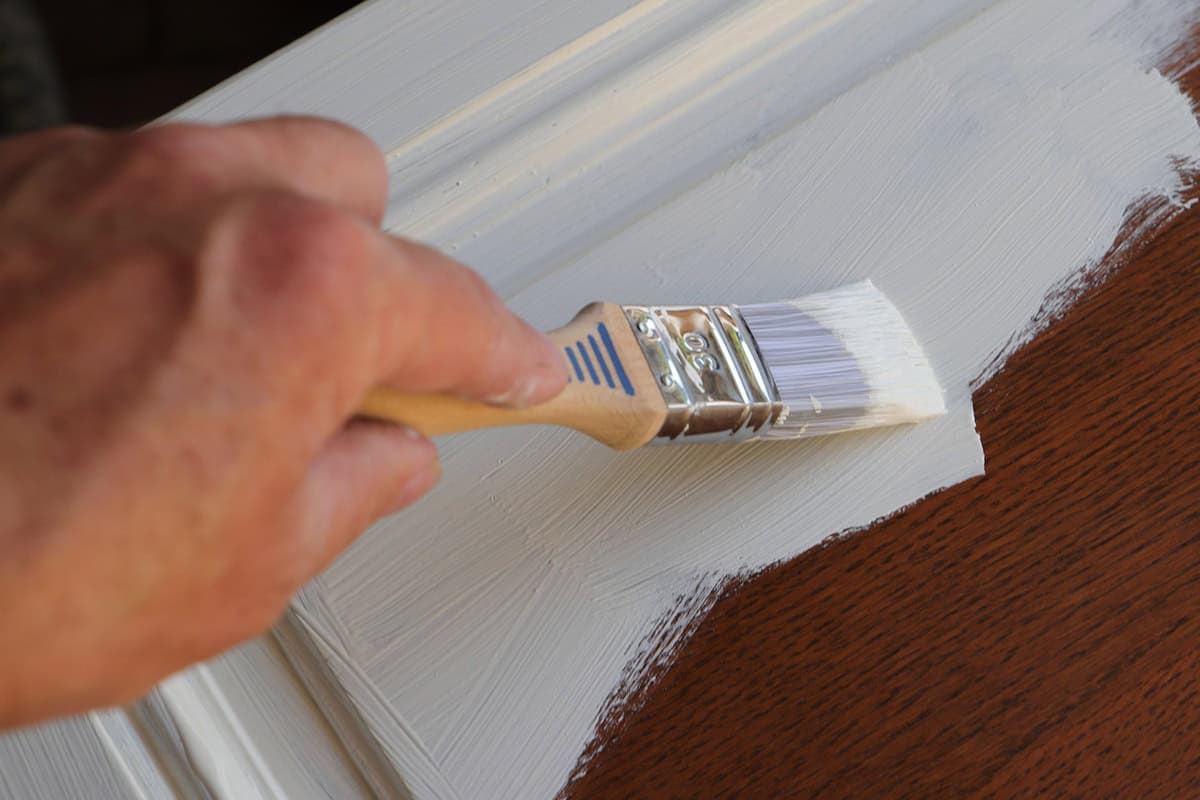
Brushing means applying paint by hand, often alongside a small foam roller on flat surfaces. This has been the standard method for a long time. Skilled painters can get clean, even results this way, especially with a self-leveling paint formula.
Here is what brushing has going for it:
- Less setup time. No need to mask the whole kitchen for overspray.
- Good for touch-ups. Easy to go back and address small spots after the main job is done.
- No big equipment needed. No compressor, hose, or sprayer to clean afterward.
That said, brushing has real limitations for cabinet work. Brush marks can show in the dried finish, especially on flat door panels. Lap marks happen when wet paint meets paint that has already started to set. Rolling can leave a texture that shows under certain lighting.
A self-leveling paint helps. So does thinning the paint properly. But even with the right products, reaching the smoothest, most even result is harder with a brush than with a sprayer. Homeowners who want the best finish for painted cabinets often find that brushing falls short of what spraying can deliver.
Spray vs. Brush: How They Compare
Here is a clear look at how both methods stack up on what matters most to homeowners:
- Finish smoothness: Spraying produces a near-factory-level result. Brushing can look great, but outcomes vary based on skill and paint type.
- Setup and prep time: Brushing requires less setup. Spraying means masking everything in the work area before a single drop of paint goes on.
- Skill required: Both methods require real skill. Bad spraying and bad brushing both show up clearly in the final product.
- Best for full kitchen jobs: Spraying is the stronger choice. The best finish for painted cabinets, on a consistent basis, comes from spraying across multiple doors and drawers.
- DIY accessibility: Brushing has a lower barrier to entry. Spraying has a steep learning curve and takes time to do well.
- Long-term durability: Both methods hold up when the prep work is done right and a quality paint is used.
What Professional Cabinet Painters Recommend
Talk to experienced professional cabinet painters, and most say the same thing: spraying produces better results for kitchen cabinet work. The finish is smoother. The color is more consistent. The final product looks closer to new cabinetry and less like a repaint.
Getting the best finish for painted cabinets is less about the method alone and more about the experience behind it. Professional cabinet painters do not always rule out brushing. Touch-ups, tight corners, and specific surfaces may call for a brush even when the main job is sprayed. Knowing when to use each tool is part of what makes an experienced painter worth hiring.
The method is only part of the story. Prep work matters just as much. Sanding, cleaning, and priming the surfaces properly is what makes paint stick and last. Skip those steps, and no method will save the finish.
What to Ask Before You Hire
Not all professional cabinet painters work the same way. Here is what to ask before you book anyone:
- Do they spray or brush, and why? A painter should be able to explain the reasoning behind their method for your specific job.
- What does their prep process look like? Sanding, cleaning, and priming should all be part of it.
- Can they show past work? Photos of completed cabinet jobs tell you a lot about what to expect.
- What paint do they use? Quality products hold up better against chips, scratches, and daily wear.
- Do they provide a written estimate? You should know exactly what is included before work starts.
The right professional cabinet painters will answer these questions without hesitation. If someone cannot explain what they do and why, pay close attention to that.
Ready to Get the Finish Your Cabinets Deserve?
JK Painting Service Corp works with homeowners who want painted cabinets that look clean, hold up well, and add real value to their kitchen. Our process is built around delivering the best finish for painted cabinets every time, with no shortcuts on prep and no surprises at the end.
Call us at 781-650-7296. We will take a look at your cabinets, walk you through exactly what we would do, and put together a written estimate with no pressure. You will know what is involved before we pick up a single brush or sprayer.
Your cabinets see a lot of daily use. Make sure the finish is built to keep up.