
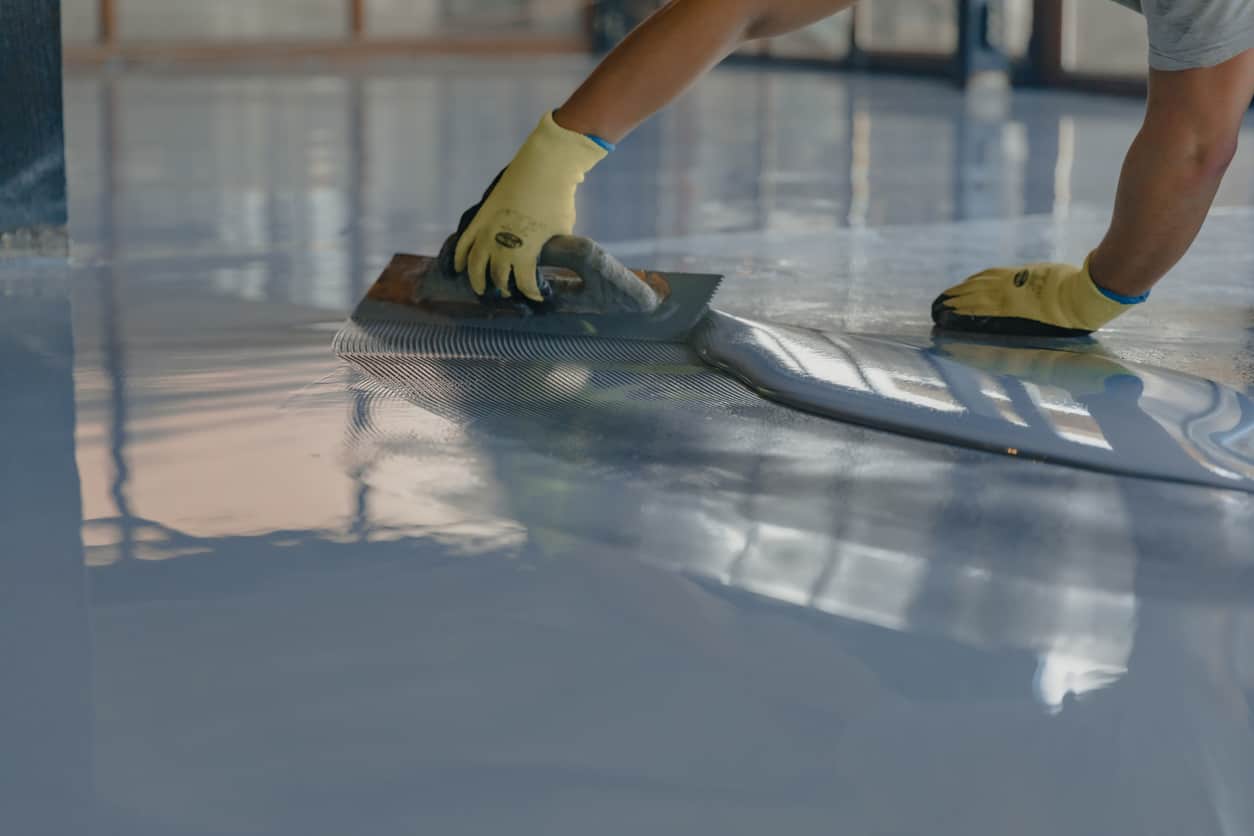
Walk into any home center and you’ll see many epoxy flooring types, each one promising a showroom floor in a single weekend. The catch is that those epoxy flooring types are not built for the same jobs, and the wrong pick can peel within a year or two. So if you’re shopping for garage floor epoxy in Weston, the smartest question isn’t “which one is the best?” It’s “which one fits how I actually use my garage?” That one shift in thinking saves you money, frustration, and a do-over down the road.
You park in your garage. Maybe you work in it. You drop tools, track in road salt, and let the occasional oil drip slide. You want a floor that handles all of that and still looks clean when you pull in at night. The problem is that every product label sounds the same, and most advice online pushes you toward whatever the writer happens to sell. You deserve a straight answer instead.
Key Takeaways
Why “Which Epoxy Is Best?” Is the Wrong Question
Here’s the part nobody likes to say out loud. There is no single winner. A coating that’s perfect for a contractor’s daily shop floor can be overkill for a garage you use to park one car and store holiday bins. And a budget kit that’s fine for light use will fail fast under a daily driver in a New England winter.
The real worry underneath the shopping is simple. You don’t want to spend good money and watch the floor flake off in patches. You don’t want to feel like the salesperson talked you into the priciest option for no reason. Both of those fears are fair. The fix is knowing what each type is actually for, then matching it to your garage.
The Three Garage Floor Epoxy Types, in Plain English
These three products show up in almost every quote and on every store shelf. The difference comes down to what’s in the can and how much of it stays on your floor after it dries. Sherwin-Williams lays out how the three resin systems differ in their technical notes, and it lines up with what installers see in the field.
So Which Garage Floor Epoxy Is Best for You?
Now we can answer the question the honest way, by use case instead of by ego. Find the garage that sounds like yours.
Best for a Light-Use or Budget Garage: Water-Based Epoxy
If your garage is mostly for storage, a second car you rarely move, or a tidy spot for the bikes, water-based epoxy is a reasonable pick. It costs the least, you can apply it yourself, and the low odor means you won’t have to air out the house for days. Just go in knowing it’s the thinnest option, so plan on a recoat sooner than you would with a heavier system.
Best for a Daily-Use Garage, Workshop, or Anything with Real Traffic: 100% Solids Epoxy
This is the one for a garage that earns its keep. Daily parking, rolling tool chests, dropped wrenches, hot tires, and winter salt all wear on a floor. A 100% solids system gives you the thick, hard surface that stands up to that kind of use for years. You’ll pay more up front and you’ll want a pro to install it, but for an active garage it’s the choice that holds up.
Best for a Quick Job in Cooler Conditions: Solvent-Based Epoxy
Solvent-based sits in the middle. It’s more durable than water-based and cures well when temperatures aren’t ideal, which can matter in an unheated New England garage. The fumes are the reason it’s less common in homes today, so it’s a fit only if the space ventilates well and you want a faster, sturdier result than a water-based kit.
The Thing That Matters More Than the Type
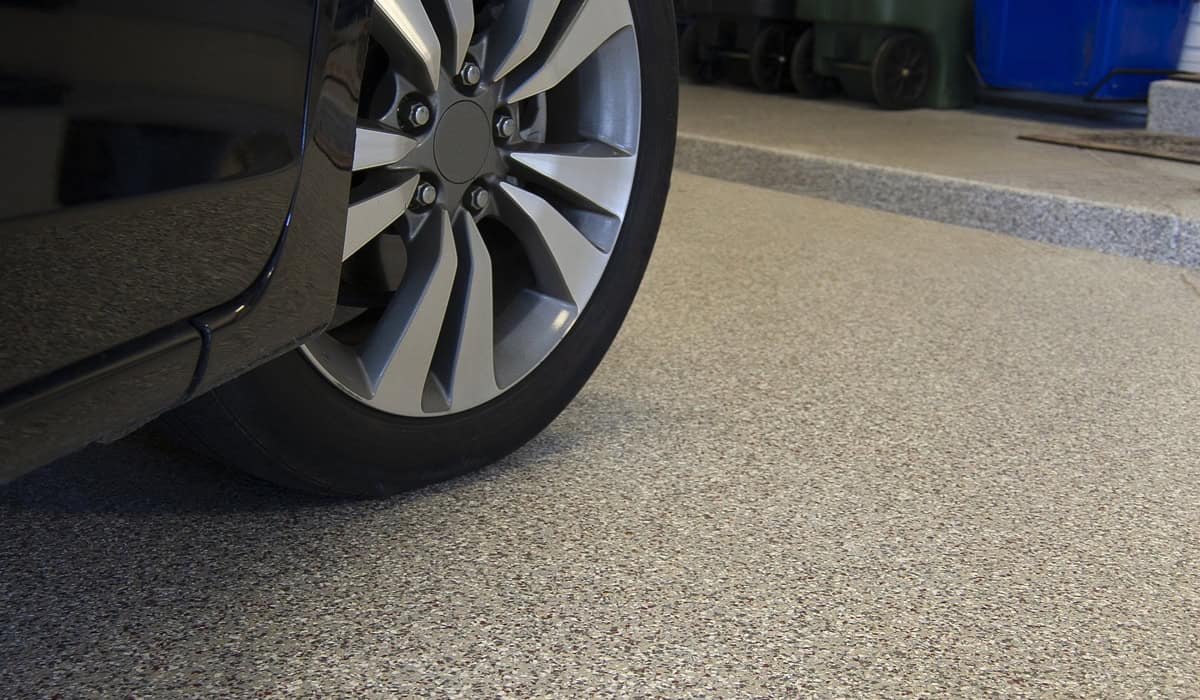
Here’s the contrarian truth most epoxy articles bury. The product you choose is the second most important decision. The first is surface prep.
A coating only lasts if it bonds to clean, profiled concrete. The most common reason a garage floor peels early isn’t a bad product. It’s a slab that was painted over without being ground or shot-blasted first, or one with hidden moisture pushing up from below. Skip that step and even 100% solids will let go in sheets.
Two things make or break the bond:
One more note for garages with big windows or a door that stays open. Standard epoxy can yellow under steady sunlight, so it performs best as an indoor coating. If your space gets strong daily light, ask about a UV-stable topcoat to keep the color true.
What a Garage Floor Epoxy Job Really Costs
Numbers help you spot a fair quote. A do-it-yourself kit runs roughly $100 to $500. A professional install lands somewhere between $3 and $12 per square foot, with a typical garage coming in around $2,500, based on national cost data from Angi. Prep work, slab repairs, and the type of resin all move that number.
It’s worth doing the math over time, not just on day one. A $300 kit that needs replacing every two to three years can cost more across a decade than a professional 100% solids floor that lasts 15 or 20. Cheap up front and cheap over the long haul are not the same thing.
A Simple Plan for Getting It Right
You don’t need to become a coatings expert. You need three steps.
Follow those three and you avoid the outcome nobody wants: a floor that looks great for a season, then starts lifting at the edges right where you park.
Ready to Pick the Right Floor for Your Garage?
You shouldn’t have to gamble on a coating that might peel by next winter. At JK Painting Service Corp, we walk Weston homeowners through the choice in plain terms, match the system to how you actually use your garage, and prep every slab the right way before a drop of product goes down. No upsell, no guesswork, just a floor built for your space.
Call JK Painting Service Corp today at 781-650-7296 for a straight answer and a written quote on your garage floor epoxy. We’ll tell you which type fits your garage, what the prep involves, and exactly what it costs before you commit.