Paint ceiling or walls first? For a full-room repaint, start with the ceiling, then move to the walls, and finish with the trim. That sequence limits rework because overhead spatter lands on surfaces that have not received their final coats yet.
For a Weston home, the more useful question is how that sequence changes when only part of the room is being refreshed, repairs are involved, or existing trim and ceilings are staying in place.
Use the Painting Order to Prevent Rework
A room can look simple until fresh paint starts landing where it does not belong. Ceiling rollers can create small amounts of spatter, and edge work can overlap onto the upper wall.
If the ceiling is completed first, those marks can be covered when the walls receive their finish coats. If the walls are already finished, the same marks become touch-ups that have to match the surrounding color, sheen, and texture.
That is why the sequence is less about tradition and more about protecting the work you have already completed.
A Practical Full-Room Sequence: Ceiling, Walls, Trim
For a standard repaint where all three surfaces are included, Sherwin-Williams recommends ceilings first, walls second, and woodwork last.
Sherwin-Williams’ interior painting order follows that exact sequence to reduce the effect of drips, spatter, and occasional spills.
This gives a Weston homeowner a useful baseline. The project can still be adjusted when the scope is different, but a full repaint has a clear place to start.
Do the Messy Work Before the Finish Work
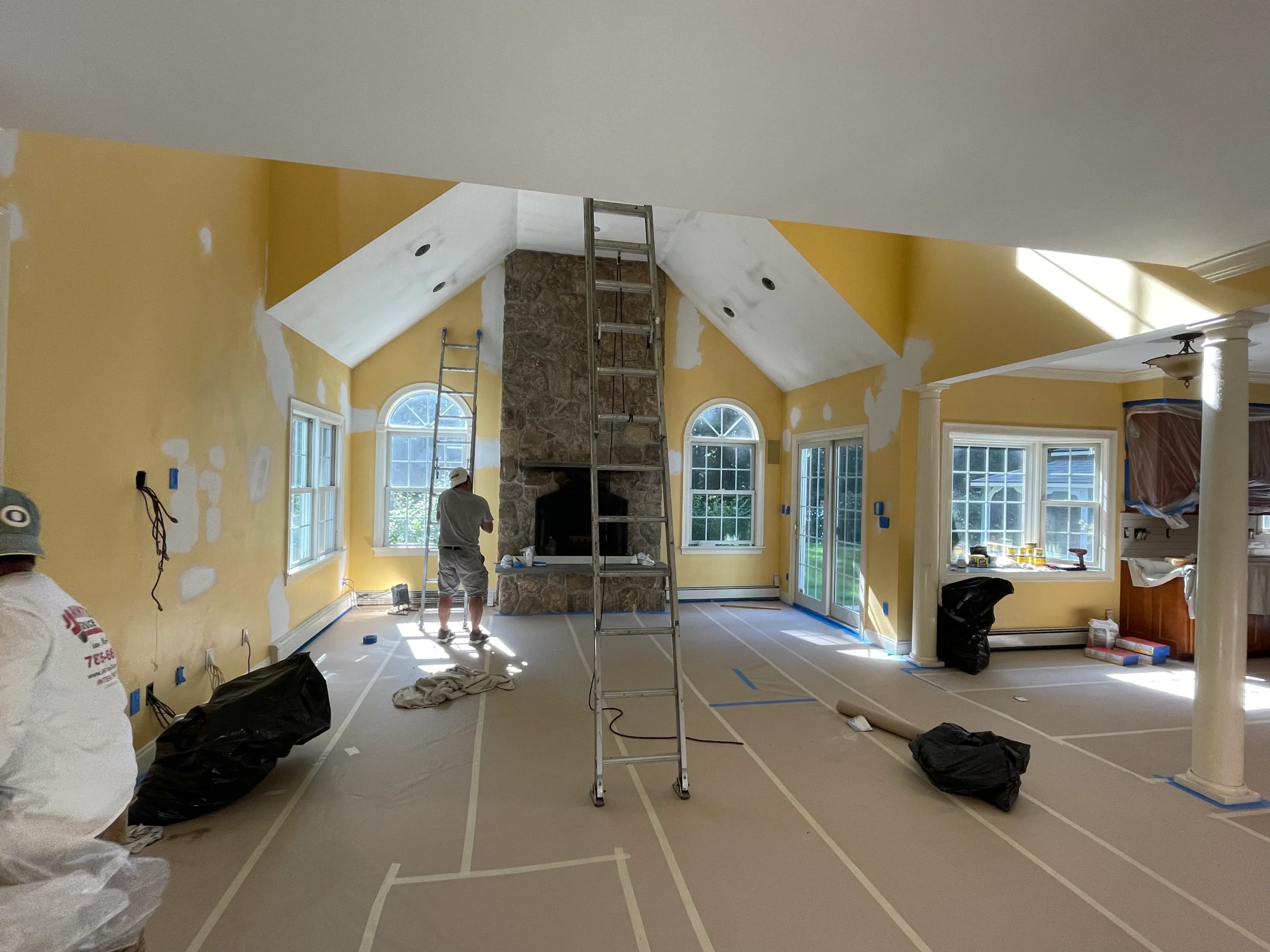
Painting order should come after the room has been repaired and prepared. Nail holes, drywall patches, rough spots, loose caulk, and damaged trim should be handled before final coats begin.
JK Painting Service Corp’s current interior process includes moving furniture, protecting floors and belongings, surface preparation, drywall repair, sanding, priming where needed, paint application, cleanup, and a final walkthrough.
Completing those steps first keeps sanding dust and repair work away from finished paint surfaces.
Why the Walls Make Sense After the Ceiling
Once the ceiling is dry, the walls become the surface that creates the final visible edge beneath it. This is where careful cutting and rolling matter most.
Any small ceiling overlap can be covered by the wall color, so the painter can focus on making the wall-to-ceiling line clean rather than trying to repair an already finished wall.
The wall coating and sheen should be chosen for the room’s use. Kitchens, bedrooms, hallways, and living rooms may call for different products even though the painting order stays the same.
Why Trim Often Makes Sense as the Final Surface
Trim is narrower than the walls and usually receives a different coating. Painting it after the walls can make it easier to create a clean final line along baseboards, door casings, and window trim.
That is also the default order in Sherwin-Williams’ room-painting guidance. It keeps wall roller spatter off newly finished trim.
A painter may use a different sequence for a specific room, but the reason should be clear and tied to the products, masking plan, repairs, or finish being used.
When the Order Changes in a Weston Home
The standard sequence applies to a full repaint, not every project. If the ceiling is already clean and only the walls are changing color, protect the ceiling and start with the walls.
If trim is the only worn surface, the project may involve trim alone. Ceiling repairs, new crown molding, drywall work, or a large color change can also affect the workflow.
The scope should decide the order. Do not repaint a surface simply because it appears in a generic room-painting checklist.
Ask About the Sequence Before You Hire a Painter
Painting order is a useful contractor question because it reveals how the company plans the project. Ask which surfaces are included, what prep happens first, what gets painted in what order, and how finished surfaces will be protected.
You should also know where primer is being used and why. A clear answer should connect the primer to bare drywall, repairs, stains, adhesion, or another specific surface need.
JK Painting Service Corp provides written proposals that identify the included surfaces before work starts and communicates with customers daily throughout the project.
How JK Painting Service Corp Handles Weston Interiors
JK Painting Service Corp serves Weston and surrounding Middlesex County communities with interior painting for walls, ceilings, trim, doors, cabinets, and other interior surfaces.
The company was founded in 2015 and currently reports more than 2,000 completed painting projects, including 1,000+ interior projects, with 80+ years of combined team experience. Interior work is backed by a 2-year workmanship warranty.
For a closer look at the full service, see our interior house painting services. If you are planning around weather or indoor drying conditions, our guide to interior painting conditions covers another part of project planning.
Frequently Asked Questions
Should I paint the ceiling or walls first?
For a full-room repaint, paint the ceiling first and the walls second. That keeps overhead spatter off finished walls and lets the wall coat create the final edge beneath the ceiling.
Should trim be painted before or after the walls?
A common repaint sequence places trim after the walls. Some painters may change the order for a specific masking or finish system, so the planned method should be discussed before work begins.
What if I only want to change the wall color?
Leave a ceiling that is in good condition alone. Protect the ceiling edge and complete the wall work without adding an unnecessary ceiling repaint.
Does primer come before the ceiling and walls?
Primer should be applied after cleaning and repairs where the surface requires it. Bare drywall, repaired areas, stains, or difficult existing coatings may need primer before the finish coats.