Most experienced interior house painters will tell you the same thing: skipping primer is one of the biggest mistakes they see homeowners make. Interior house painters fix these kinds of problems every single week, and the repairs almost always cost more than doing it right the first time.
So, can you paint without primer? Technically, yes. But just because you can doesn’t mean you should. It’s one of the most common questions homeowners ask, and the answer matters more than most people think. By the end of this article, you’ll know exactly why, what happens when primer gets left out, and when it actually is okay to skip it.
Key Takeaways:
- Skipping primer leads to peeling, uneven color, and poor paint adhesion on most surfaces.
- Primer saves you money in the long run by reducing the number of topcoats you need.
- There are a few situations where you can skip primer, but they are more limited than most people think.
- The type of surface you’re painting determines how much primer matters.
- Professional painters use primer on nearly every job for a reason: it works.
Why Primer Exists in the First Place
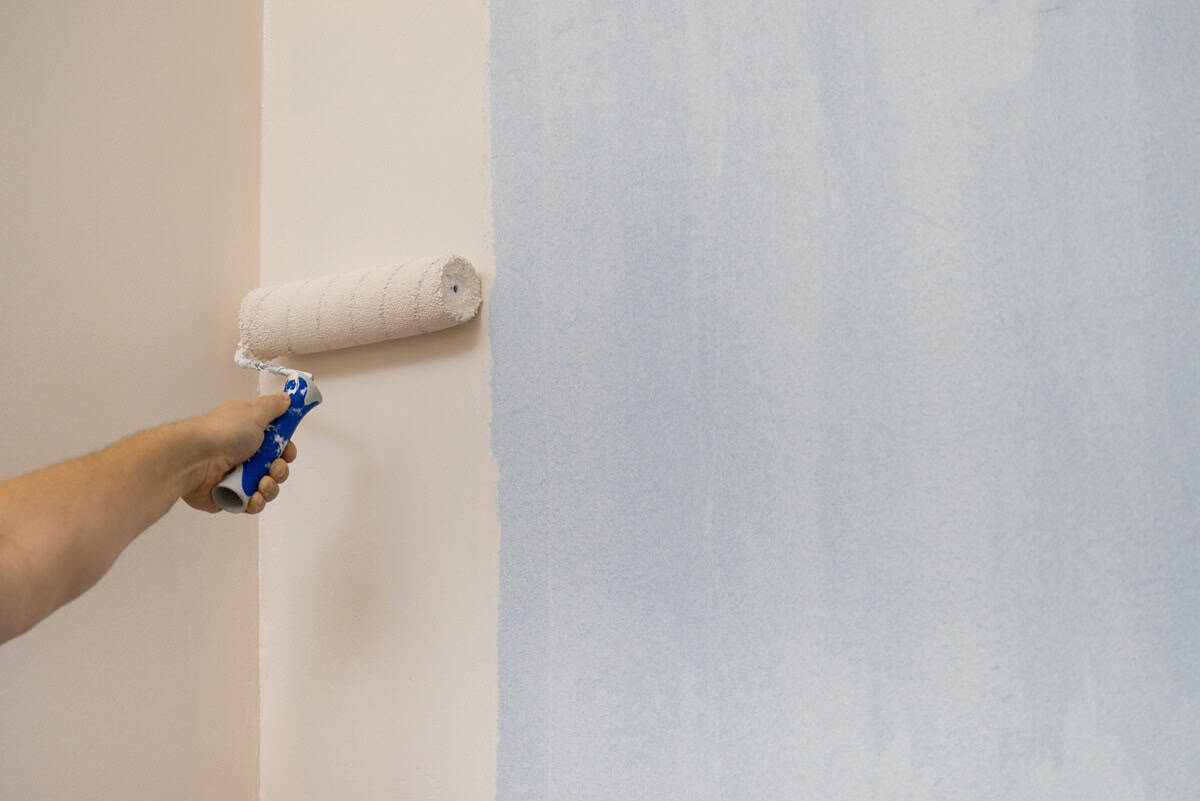
Primer is not just “extra paint.” It has a completely different job than your topcoat. Primer creates a bond between the surface and the paint. It seals porous materials like bare drywall, raw wood, and patched areas so your topcoat goes on smooth and sticks the way it should.
Think of it like this: painting without primer is like trying to tape a sticky note to a dusty shelf. It might hold for a minute, but it’s going to fall off. Primer cleans up that surface at a chemical level so the paint can grab on and stay.
Primer also blocks stains. Got water marks on a ceiling? Tannin bleed from wood trim? Crayon on the wall from your kids? Primer stops all of that from bleeding through your fresh paint.
What Actually Happens When You Skip Primer
Here’s where things get real. If you skip primer, you’re likely going to run into one or more of these problems.
Peeling and Flaking
Without primer, paint has nothing to grip. On slick or glossy surfaces, the topcoat sits on top rather than bonding to the material. Within months (sometimes weeks), you’ll see bubbling, cracking, and peeling. That means you’ll be scraping, sanding, priming, and repainting. The very step you tried to skip now has to be done anyway, plus all the extra work of fixing the damage.
Uneven Color and Blotchy Coverage
New drywall, patches, and joint compound all absorb paint at different rates. Without primer to even things out, you end up with splotchy walls where some areas look darker and others look washed out. You might add a second or third coat of paint trying to fix it, but the problem isn’t the paint. It’s the missing primer underneath.
More Coats of Paint (and More Money Spent)
Here’s the part that surprises most homeowners. People wonder can you paint without primer to save a few bucks, but skipping primer to save money usually costs more. A gallon of quality primer runs about $20 to $40. A gallon of quality paint runs $40 to $80. When you skip primer, porous surfaces drink up your expensive paint like a sponge. What should have been a two-coat job becomes three or four coats. That extra paint adds up fast.
Stains Bleeding Through
If you’re painting over water stains, smoke damage, marker, or wood knots, primer is the only thing that will block them. Regular paint just doesn’t have the chemistry to seal those stains. You can put five coats of paint on a water-stained ceiling and that brown mark will keep showing through.
Can You Paint Without Primer? When It’s Actually Okay
On the flip side, there are situations where primer is not optional. Skip it in these cases and you’re practically guaranteed problems.
- Bare drywall or new construction. Raw drywall is like a sponge. Without primer, your paint soaks in unevenly and you’ll never get a uniform finish.
- Going from dark to light colors. Trying to cover a dark red or navy wall with a light gray or white? Without primer, you’ll need four, five, or even six coats of paint. A coat of white or tinted primer makes it a two-coat job.
- Glossy or slick surfaces. Painting over semi-gloss, high-gloss, or any shiny surface without primer is asking for peeling paint. Primer gives the topcoat something to hold onto.
- Wood and wood trim. Raw wood has tannins that bleed through paint. Primer seals those tannins in. Painted wood trim in older homes (like many homes here in Concord, MA) can also have layers of oil-based paint underneath. A bonding primer makes sure your new latex topcoat sticks to that old oil-based layer.
- Stain-prone areas. Kitchens, bathrooms, ceilings with water damage, or rooms where people have smoked all need a stain-blocking primer before paint goes on.
The Cost of Skipping Primer vs. Doing It Right
Let’s put some real numbers on this. Say you’re painting a 12×12 bedroom.
Doing it with primer: one coat of primer ($15 to $20 in material) plus two coats of paint ($30 to $50 in material). Total: roughly $45 to $70 in paint and primer.
Doing it without primer on bare or patchy drywall: three to four coats of paint ($60 to $100 in material) plus the time it takes to apply those extra coats. If you end up with blotchy results or peeling and have to redo it? Double all of those numbers.
The math speaks for itself. Primer is one of the cheapest parts of a paint job, and it pays for itself by cutting down on the amount of topcoat you use.
Why Professional Painters Almost Always Use Primer
When you ask, “Can you paint without primer?” most professionals will give you a straight answer: you can, but you probably shouldn’t. There’s a reason experienced painters prime almost every surface. It’s not because they want to charge you more. It’s because they know what happens when it gets skipped, and they don’t want to come back to fix the problems later.
Good interior house painters build primer into their process because they’ve learned through thousands of jobs what works and what doesn’t. They’ve seen the peeling ceilings, the stain bleed-through, the four-coat cover-up jobs. They know that one coat of the right primer prevents all of it.
If you’re hiring interior house painters for your home, ask them about their primer process. If they say they skip it to save you money, that should raise a red flag. A painter who cuts corners on primer may be cutting corners elsewhere, too.
How to Choose the Right Primer
If you’ve made it this far, you know the answer to “can you paint without primer” is more nuanced than a simple yes or no. So when primer is the right call, what kind should you use? Not all primers are the same. Here’s a quick breakdown:
- Latex primer works well for most interior walls, drywall, and softwoods. It’s easy to clean up and dries fast.
- Oil-based primer is better for heavy stain blocking, raw wood, and older surfaces that may have oil-based paint underneath. It takes longer to dry and requires mineral spirits for cleanup, but it bonds like nothing else.
- Shellac-based primer is the heavy hitter. If you’ve got serious stains, odors, or tannin bleed, shellac primer seals it all. It dries quickly but has strong fumes, so ventilation is a must.
For most standard interior painting projects, a quality latex primer will do the job. But if you’re dealing with stains, wood, or surface-bonding issues, talk to a professional about the right product for your situation.
The Bottom Line: Can You Paint Without Primer?
You now have the full picture. Can you paint without primer? In a few limited situations, yes. But for most projects, especially on new surfaces, color changes, or older homes like those throughout Concord, MA, primer is the difference between a paint job that looks great for years and one that starts failing in months.
The cost of primer is small. The cost of fixing a paint job that was done without it is not.
If you’re not sure whether your project needs primer, or if you’d rather have the job done right by professionals who stand behind their work, reach out to JK Painting Service Corp. Interior house painters who take the time to prep and prime your surfaces correctly are the ones who give you results that last.
Call JK Painting Service Corp at 781-650-7296 today to schedule a free estimate. Ask about their prep and priming process. Ask about the products they use. Ask any question you have. A team that’s willing to answer every question before they pick up a brush is the kind of team you want in your home.