How long does exterior paint last? A common repaint range is about 5 to 12 years, but the right answer for a Lexington home depends on the surface, previous preparation, coating system, sun exposure, moisture, and New England weather.
Instead of relying on one fixed number, it is more useful to look at the condition of the finish and the factors that shorten or extend its service life.
How Long Does Exterior Paint Last?
Benjamin Moore says a home’s exterior is typically repainted every 5 to 12 years. The manufacturer also points to the quality of the previous application, the type of paint, local weather, and the material being painted as factors that affect that range.
That is a better way to think about repaint timing than using one number for every house. A protected section of siding can stay in good condition longer than a sun-exposed wall or a section that regularly holds moisture.
What Changes How Long Exterior Paint Lasts?
The age of the coating matters, but the conditions around it matter just as much.
Surface Type Matters, but Condition Matters More
Wood siding, fiber cement, masonry, stucco, and previously painted vinyl do not weather in the same way. The coating system also changes by surface.
That does not mean every wood home or every masonry home should follow one fixed repaint schedule. Age, previous coatings, moisture exposure, repairs, and the condition of the existing finish should all be reviewed before deciding that a surface is ready for repainting.
On older Lexington homes, wood trim and siding often need more preparation because joints, sills, and exposed edges can hold moisture or show wear before the broader wall surface does.
Preparation Has a Major Effect on Paint Life
A new finish lasts only as well as the surface underneath it allows. Painting over chalk, loose paint, damaged caulk, or unstable wood can leave weak areas under an otherwise clean-looking finish.
JK Painting Service Corp’s current exterior process can include power washing, scraping, sanding, minor wood repairs, priming, caulking, and finish coats. The exact preparation depends on the condition of the property.
Our guide to why exterior coatings peel shows how moisture and surface condition can affect adhesion on exposed wood.
Lexington Weather Can Shorten Exterior Paint Life
Eastern Massachusetts puts exterior coatings through cold winters, humid summers, UV exposure, rain, and repeated temperature changes. Those conditions can affect different parts of a home at different rates.
Joints, trim, sills, and other areas where water can sit often deserve closer attention. South- and west-facing elevations can also show fading or weathering sooner because they receive more direct sun.
JK Painting Service Corp identifies late spring through early fall as the more reliable exterior painting window in this area. The actual schedule is still set against the forecast and the product requirements for the project.
Signs Your Exterior May Be Ready for Repainting
The calendar can help you remember when the last repaint happened, but the condition of the surface is the better guide.
Peeling or flaking: Areas where the coating is lifting should be inspected before more of the surface is exposed.
Cracking: Cracks in the coating or around joints can allow moisture to reach the surface below.
Chalking: A powdery residue can indicate that the finish is weathering.
Failed caulk: Gaps around trim, windows, doors, and material transitions can let water into areas that should stay sealed.
Exposed or weathered wood: Bare areas should be addressed before moisture causes more damage.
How to Help Exterior Paint Hold Up Longer
Exterior maintenance is mostly about catching small problems before they spread.
Walk around the home periodically and look closely at trim, joints, window sills, siding near rooflines, and areas close to landscaping. Address damaged caulk, peeling sections, drainage issues, and exposed wood instead of waiting for a full wall to fail.
Cleaning can also help when dirt, mildew, pollen, or chalk builds up. The correct cleaning method depends on the surface and condition, so our pressure washing versus soft washing guide can help explain the difference.
How We Approach Exterior Painting in Lexington
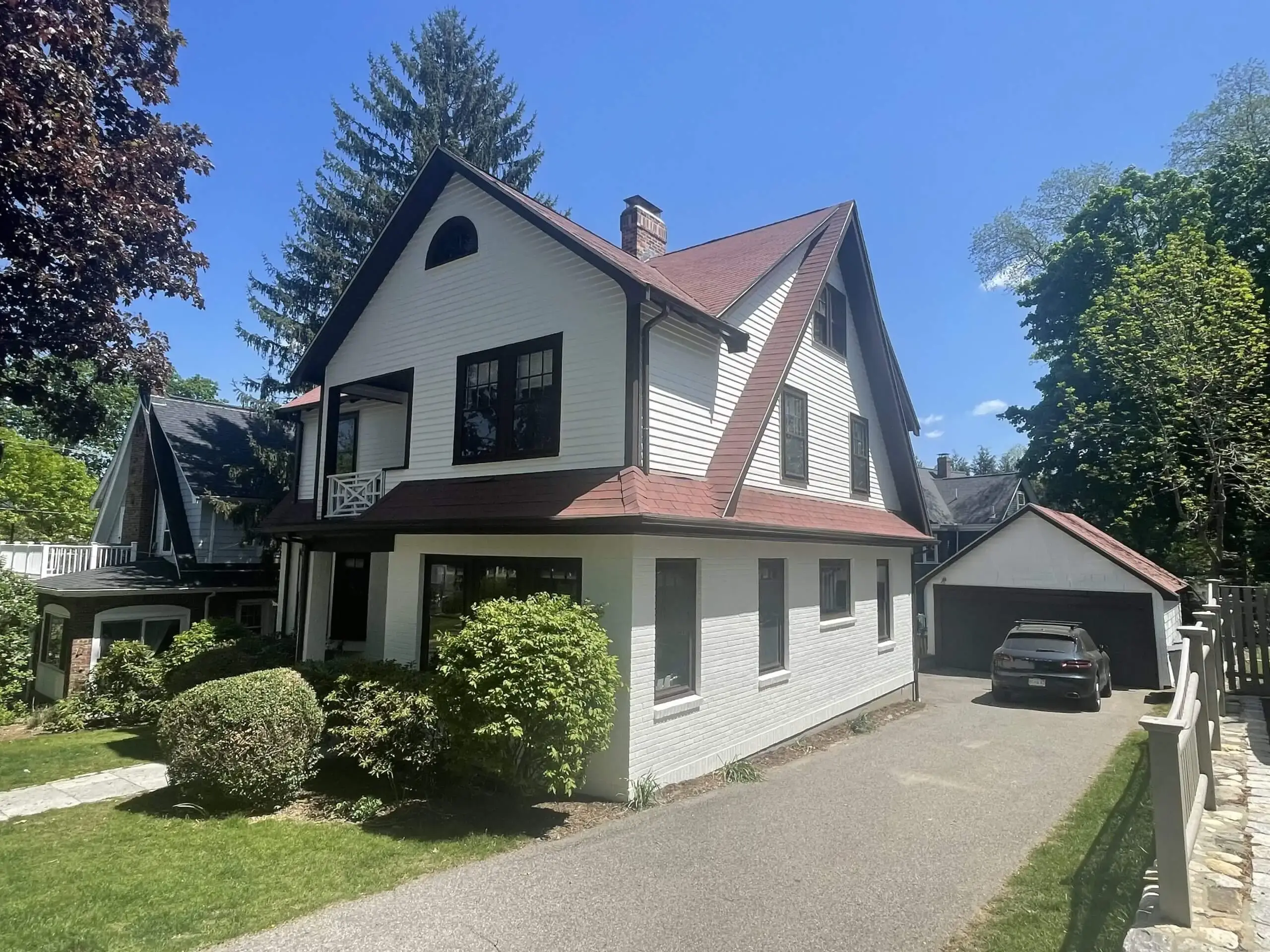
At JK Painting Service Corp, we start by reviewing the condition of the exterior rather than assuming every home needs the same process. The scope can include washing, scraping, sanding, repairs, priming, caulking, and finish coats based on what the surfaces need.
Our current Lexington and exterior service pages confirm free estimates, screened professionals, daily communication, complete cleanup, and a 2-year workmanship warranty. Licensing and insurance documentation is available from the company on request.
For more on the service itself, see our exterior house painting services.
Frequently Asked Questions
How often should a house exterior be repainted?
Benjamin Moore gives a general range of 5 to 12 years, but the right timing depends on the surface, previous application, product, weather, and current condition.
Should I repaint just because the exterior is several years old?
Not necessarily. Age is useful context, but peeling, cracking, chalking, failed caulk, exposed wood, and moisture-related damage are stronger signs that the finish needs attention.
Can preparation affect how long exterior paint lasts?
Yes. Cleaning, removing loose material, repairing damaged areas, priming where needed, and sealing joints give the finish a more stable surface to bond to.
Does New England weather affect exterior paint life?
Yes. Cold winters, humidity, rain, direct sun, and seasonal temperature changes can wear exterior coatings at different rates around the home.